Saturday, October 15, 2016

AUDITORS QUESTION LEGALITY OF TWO MONTH CONTRACT TO SNAG CINDY GILLESPIE FOR DHS DIRECTOR


GOV. ASA HUTCHINSON TRIES DEFENDS HIS ACTIONS REGARDING DHS HEAD CINDY GILLESPIE 
Legislative auditors Thursday questioned whether the state Department of Human Services circumvented the Arkansas Constitution and state law with its two-month contract with Cindy Gillespie before she formally assumed her current position as executive director at a $280,000-a-year salary.

But the department's chief legal counsel, David Sterling, disagreed with the auditors' findings and said the department's contract with Gillespie didn't violate the constitution or state law.

 
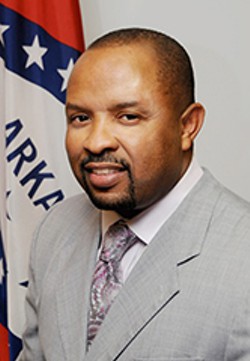
STERLING RAN AGAINST LESLIE RUTLEDGE FOR REPUBLICAN AG NOMINATION AND WAS TROUNCED

The Legislative Joint Auditing Committee co-chairman, Sen. Jimmy Hickey, R-Texarkana, told fellow lawmakers, "We decided that we would just contact the governor's office [and] just let them know that there may be an issue with the way this was being done, and we thought this was the best way to handle it" before the department executed the contract with Gillespie.

 
STATE SENATOR JIMMY HICKEY (R) GAVE GOV. HUTCHINSON A HEADS UP ON FINDINGS


In a statement issued after the meeting, Gov. Asa Hutchinson said, "We had the contract reviewed by our legal team, and we were comfortable with proceeding with that contract despite reservations by Legislative Audit.

"At the end of the day, though, the Legislature had the authority to approve or disapprove the executive director position at DHS, and they approved it," the governor said in a written statement issued after the legislative committee reviewed the department's audit.

Rep. Kim Hammer, R-Benton, said the Legislature could enact legislation in the future "where we could kind of close the loophole on this one, and take what we learn and move forward."


REPRESENTATIVE KIM HAMMER (R) SAYS THIS WAS A LEARNING EXPERIENCE


Gillespie is a former health care adviser to the former Republican governor and 2012 presidential nominee Mitt Romney. In February, Hutchinson announced Gillespie's hiring as executive director of the Department of Human Services, starting March 1, and her starting salary at $280,000 a year. But until April 30, she had a professional consulting services contract until the law on the director's salary could be changed to allow her salary.

Gillespie replaced longtime department director Jon Selig as the chief of the state's largest agency, which has a budget exceeding $8 billion a year and thousands of employees. Selig was paid $161,038 a year when he departed the agency.

Deputy Legislative Auditor Jon Moore said, "We question whether this contract circumvented the requirements" in the Arkansas Constitution's Article 16, Section 4, and Arkansas Code Annotated 19-11-1004 (d).


JON MOORE

Article 16, Section 4, of the constitution provides that the General Assembly shall fix the salaries and fees of all officers of the state and no greater salary or fee than that fixed by law shall be paid any officer, employee or other person, Moore said.

Arkansas Code Annotated 19-11-1004 (d) states that no director or any other department head of any state agency shall receive additional compensation from professional or consultant services contracts, Moore said. Act 928 of 2015 established maximum-authorized salary for the Department of Human Service's executive director at $161,038 for fiscal year 2016, Moore said.

On Feb. 12, the department entered into a sole-source professional consulting services contract with Gillespie, starting March 1 and ending April 30, for a total of $49,000 or 30 percent of the originally authorized salary for the director's job, Moore said.

"The duties described in this contract are essentially the same as the duties associated with the legislatively established position of DHS Executive Director," Moore said. "The contract allowed the new DHS executive director to begin working before a new appropriation was approved by the General Assembly and to be compensated at a higher rate than that allowed by the current appropriation."

Act 2 of this year's fiscal session appropriated $280,000 for the maximum-authorized salary for the department's executive director, effective April 26, for the rest of fiscal year 2016, and Gillespie formally assumed the position of executive director on April 27, Moore said.

But Sterling said that Arkansas Legislative Audit's finding "is incorrect when it asserts that the duties assumed by Ms. Gillespie under the contract were 'essentially the same' as those of DHS director.

"As the executive head of DHS, the director is authorized by law and expected to promulgate standards and rules; to hire, fire and discipline staff; to conduct performance evaluations; to decide employee grievances; to execute contracts and agreements on behalf of DHS; to initiate and complete procurements; to allocate or transfer state and federal funds; and to authorize expenditures, among many other duties," Sterling said.

During the two-month period that Gillespie was under contract with the department, "she did none of these things, nor did the contract authorize her to do any of those things," he said.

Gillespie's responsibilities under the contract were limited to consulting services in organizational management for human services programs, and management consulting "is not equivalent to exercising the state's authority as an executive head of a state agency," Sterling said. During Gillespie's stint as a consultant, any or all exercises of state authority were undertaken by the department's deputy directors in direct coordination with the governor's office, he said.

Gillespie became the department's executive director -- a new position and new title created by Act 2 of the fiscal session -- on April 27, and she received no more compensation under contract for services provided after she was sworn in, so there has been no violation of Arkansas Code Annotated 19-11-1004 (d), Sterling said.

The limitations of Article 16, Section 4 of the Arkansas Constitution apply to state officers and employees, and she wasn't an officer or an employee when she was a consultant, so there has been no violation of the Arkansas Constitution, Sterling said.

But Frank Arey, attorney for Arkansas Legislative Audit, told lawmakers that there were a number of items and activities that occurred during this time period that "makes us feel comfortable with this assertion that she was in fact acting as director.


FRANK AREY, LEGISLATIVE AUDIT ATTORNEY & FORMER ARK. APPEALS COURT JUDGE


"DHS supplied us with a stack of documents that they say during this time were executed by other folks and that is in fact true..., but to our way of looking at this that was not inconsistent with her also serving as director at the same time," Arey said. "We feel like the effect of this personal services contract that Ms. Gillespie entered into was to pay her considerably more than this body had appropriated for this position."

Sen. Eddie Cheatham, D-Crossett, said Gillespie "is doing an excellent job.


SENATOR EDDIE CHEATHAM SAID HE DOESN'T WANT TO ROCK THE BOAT


"We don't want to start over trying to rehire her. She might change her mind," Cheatham said.

Gillespie is paid almost $120,000 a year more than the former DHS director, John Selig.

Friday, October 7, 2016

FORMER DHS EMPLOYEE GOES TO PRISON FOR STEALING PATIENT ID'S AND FILING FRAUDLENT INCOME TAX RETURNS


Christopher R. Thyer, United States Attorney for the Eastern District of Arkansas, announced today that United States District Judge Kristine G. Baker sentenced Sir John Ashley Holliday, 28, of Dallas, Texas, to two years in federal prison for aggravated identity theft and theft of government funds, and ordered him to pay $13,191 in restitution to the Internal Revenue Service.

Holliday was formerly employed as an orderly at the Arkansas State Hospital, a Little Rock psychiatric facility operated by the Arkansas Department of Human Services.

At his change of plea hearing before Judge Baker on May 19, 2016, Holliday admitted that he stole patient names and social security numbers that he obtained during his employment at the State Hospital.

Holliday used the stolen information to file fraudulent federal income tax returns in the patients’ names which claimed refunds on wages never actually earned.

Holliday then obtained refunds from the fraudulent returns in the form of debit cards totaling $13,191, which he later spent as his own.

Holliday pleaded guilty to aggravated identity theft and theft of government funds.


The charge of aggravated identity theft carries a mandatory two-year term in prison, to be served consecutively to any other related sentence.


Holliday was also ordered to serve three years of supervised release. 

Holliday's attorney, Assistant Federal Public Defender Latrece Gray, gave U.S. District Judge Kristine Baker several letters written in support of Holliday, including one from his current employer, who wasn't identified. She told the judge Holliday has changed since he committed the crimes in 2011 and wants a chance to prove he now knows the difference between right and wrong.

"I'm sorry for my mishap for everybody that I became a problem to," Holliday said from a courtroom lectern.

Assistant U.S. Attorney Alex Morgan didn't object to Gray's request for the minimum sentence, but said that despite the "relatively small" amount of money involved, the crime is a "serious offense."

He said the identity theft was "particularly egregious, especially because the victims were patients of a psychiatric ward."


The patient demographic of the Arkansas State Hospital is not reflective of wealthy or even employed individuals. Most are indigent, on government assistance, or prisoners awaiting a court ordered psychiatric observation.

Baker sentenced Holliday to one day in prison for theft of government funds and two years for the identity theft. She also ordered him to make full restitution to the IRS and to serve three years on supervised release after his prison term.

The crime was investigated by the FBI, the IRS-Criminal Investigation Division and the U.S. Secret Service.


In 2011, the Arkansas Disability Rights Center of Arkansas released a scathing
report that detailed a long history of systematic failures at the DHS operated facility.

BEHIND CLOSED DOORS: Continuing Systemic Failures at the Arkansas State Hospital 


Sunday, September 25, 2016

DHS ASSISTANT DIRECTOR LACKS KNOWLEDGE OF NORMAL BEHAVIOR OF CHILDREN

 
ARELENE ROSE


Arlene Rose, assistant director for operations and program development with the state Division of Childcare and Early Childhood Education with the Arkansas Department of Human Services appears to be out in the cold when it comes to recognizing normal childhood behavior.

In comments she made to  a reporter for the Arkansas Democrat Gazette in regard to an increasing number of children being expelled from daycare centers for biting behavior, she launched into a rant about a program DHS recently launched, stealing funding from other existing programs, that is supposed to reduce expulsions and suspensions in early-learning settings.

Rose stated, "It is a huge project, but I tell you, the reception overall has been very positive," Rose said. "We know that there has been a need. Even prior to launch, I would hear providers talk about challenges that they've experienced with children. You know, they would be at their wits' end asking, 'What do we do?'"

Rose grinned widely as she leaned forward and tapped her finger on a glossy picture of a pyramid.

"It excites me," she said. "I just think, 'What can we do for those babies that's really going to help them be successful?' This is near and dear to my heart, it really is. I just believe that every child can be saved."

A problem that DHS and Rose cannot get around in determining a true need for this wasteful project is that there are no records or statistics that document exactly how many toddlers have been expelled or suspended from Arkansas daycare centers. 

That's right, there are no Arkansas-specific statistics on how many children up to 5 years old have been suspended or expelled.

"The short answer is that we don't have data because we didn't previously track this, but we have now started to do so and should have some data at some point in the near future," said Amy Webb, a spokesman for the Human Services Department.

AMY WEBB

Look at Amy try and put a spin on the fact the DHS launched a program, hired additional staff, took funds from other programs before it is even documented that there is a problem with daycare expulsions in Arkansas.

The Arkansas Democrat Gazette story began with the experience one parent of two children had to deal with when the daycare center they attended expelled or told the mother her children were not welcome at the center after one of the children bit another child.

The Arkansas Democrat Gazette did not attempt to speak with the daycare center and determine if there were other issues that led to their refusal to care for the children.

Rose's comment, "I just believe that every child can be saved", implies that biting behavior is abnormal and is a gateway behavior to a doomed life.

Where does DHS get all these buffoons from?

Biting is a normal toddler behavior when the are dealing with anger or stress.  Early Childhood Development 101.  Maybe Rose missed that day or slept through that class.

Arkansas has the lowest requirements of any state as far as the education that is required to serve as a child care provider according to Nicola Edge, a UAMS associate professor in family and preventive medicine.

"Biting is really normal. It's going to happen in day care centers," Edge said. "The specialists can say, 'Here's a little pamphlet that's going to tell you what to do when children bite. Here's a pamphlet you can talk through with parents and that will tell the parents how to respond. Check back with me in two weeks, and let's see if that met your needs.'"

The real problem here is that DHS did not change the minimum requirement for daycare teachers when the overhauled it minimum licensing requirements for child-care centers in 2014.  They are using standards developed in 1945.

Uneducated daycare staff and their inability to deal with normal toddler behavior is a problem that DHS could have corrected in 2014 by strengthening requirements for daycare personnel.

DHS would rather hold bi-weekly meetings, spend money on an undocumented, made up problem rather than change 71 year old standards.


Wednesday, September 7, 2016

FORMER DHS WORKER ADMITS THAT SHE ACCEPTED BRIBES TO ILLEGALLY DISPERSE $6 MILLION IN FEDERAL FUNDS

A former state employee admitted Tuesday that she took bribes for nearly three years to permit two other women to obtain $6 million in federal funds by falsely claiming they fed underprivileged children in after-school and summer nutrition programs.


TONIQUE HATTON


Tonique Hatton, 39, of North Little Rock, flanked by defense attorneys Stuart Vess and Christian Alexander, pleaded guilty in a federal courtroom in Little Rock to charges of conspiracy to commit wire fraud and receipt of a bribe.


Both charges centered on Hatton's job at the state Department of Human Services, which served as the administrator for the feeding programs, which were funded by the U.S. Department of Agriculture.


Assistant U.S. Attorney Jana Harris said Hatton's responsibilities included processing applications from people who applied to be sponsors to feed low-income children and later be reimbursed through the federal government. Her duties included determining the sponsors' eligibility and approving their proposed feeding sites.


From January 2012 through August 2014, Hatton and another state worker, Gladys Elise Waits, also known as Gladys Elise King, approved paperwork allowing Jacqueline Mills of Helena-West Helena and Kattie Jordan of Dermott to be sponsors and submit claims, despite knowing that the women planned to commit fraud, Harris said. She said Hatton and Waits also helped Mills and Jordan avoid detection.


GLADYS ELISE WAITS

JACQUELINE D. MILLS

Mills operated approved feeding sites in cities including Helena-West Helena and Marianna, through which she received more than $2.5 million in federal funds. Jordan operated approved sites in cities including Dermott, Dumas, Eudora and Lake Village, through which she received more than $3.5 million in federal funds. Both Mills and Jordan claimed they fed far more children than they actually did, Harris said.


Waits pleaded guilty March 30 to conspiracy to commit wire fraud and receipt of a bribe, and is awaiting sentencing. If she and Hatton hadn't pleaded guilty, both would be joining three other people in a jury trial that is to begin Oct. 17 in the Little Rock courtroom of U.S. District Judge James Moody Jr.


In return for Hatton's guilty pleas, for which she will be sentenced in about 90 days, Moody granted Harris' request to dismiss 26 individual counts of bribery against Hatton.


In the courtroom, Harris said Hatton accepted $30,770 in bribe checks made out to her, and another $62,700 in bribe checks made out to a relative of hers.


Although an indictment lists 27 checks that it says Hatton received from Mills and Jordan during the nearly three-year period, Hatton pleaded guilty to a single bribery charge, admitting that she accepted a $16,000 check from Mills on May 25, 2013.


Still, as part of the plea agreement, Hatton agreed that "every bit" of the allegations against her in the indictment were true.


The indictment listed checks to Hatton that ranged from $5,000 to $16,000. The memo lines of the checks were occasionally left blank, but in most cases indicated the checks were used to pay for furniture, supplies, food, mileage, setup fees, travel and building materials.


Harris didn't say whether the checks covered some legitimate expenses as well as the fraudulent expenses. However, she told Moody that the amount of restitution that will be due by each of the defendants hasn't yet been agreed upon. If the restitution can't be worked out before sentencing, Harris said, the parties will let the court decide the amounts each defendant owes.


Those still awaiting trial in the case are Mills; Dortha Harper, also known as Dorothy Harper, of England; and Waits' estranged husband, Anthony Leon Waits, also of England.

 
ANTHONY LEON WAITS

The conspiracy charge against Hatton is punishable by up to 20 years in prison, while the bribery charge is punishable by a maximum of 10 years in prison. Each charge also carries a potential fine of up to $250,000.


While federal sentencing guidelines will help determine a recommended penalty range within the statutory requirements, Harris said Hatton's plea agreement includes enhancements for abusing a position of trust, accepting more than one bribe and for the amount of loss involved in the scheme.


She said Hatton has agreed to forfeit to the government $17,681 that she has in a bank account, to be put toward her restitution.


Hatton wasn't asked in the courtroom to explain her guilt in her own words, and she declined to comment after the hearing when asked what motivated her to commit the crimes.

We knew what motivated her...greed and lack of internal controls by the Arkansas Department of Human Services. 

BACK IN 2014 DHS DIRECTOR JOHN SELIG ADMITTED LACK OF CONTROLS PERMITTED "BAD ACTORS" TO PLUNDER THE PROGRAM DHS ADMINISTERED.


The federal government contracted with DHS to process applications from would-be sponsors, which included reviewing their budgets and the sites where they intended to provide food, to ensure they were eligible to participate. DHS then administered the federal funds to the pre-approved sponsors.


Assistant U.S. Attorney Jana Harris pointed out that DHS bore some responsibility by allowing the fraud to occur. "Because their applications had been approved for a specified number of sites and a specified number of children who could be fed at the sites, inflated claims were approved and paid by DHS without further scrutiny," Harris said.


Tuesday, May 17, 2016

DHS DEPUTY DIRECTOR CHARGED WITH CONSPIRARCY AND BRIBERY PLEDS GUILTY - RECEIVES 30 MONTHS IN FEDERAL PRISON


FORMER DHS DEPUTY DIRECTOR STEPHEN B. JONES

A former deputy director of the Arkansas Department of Human Services (ADHS), a multi-billion dollar state agency, pleaded guilty for providing official assistance in exchange for bribes from the owner of two mental health companies.
 

Assistant Attorney General Leslie R. Caldwell of the Justice Department’s Criminal Division and First Assistant United States Attorney Patrick C. Harris of the Eastern District of Arkansas made the announcement.
 
Steven B. Jones, 49, of Marion, Arkansas, pleaded guilty to a two-count information charging him with conspiracy and bribery concerning programs receiving federal funds. 
 
According to his plea agreement, Jones served as deputy director of ADHS from approximately April 2007 until July 2013. While serving in that capacity, Jones solicited and accepted multiple cash payments and other things of value from the owner of two businesses that provided inpatient and outpatient mental health services to juveniles. This individual provided the cash payments and other things of value to Jones through the use of two intermediaries, a local pastor and a former county probation officer and city councilman.


As part of his plea, Jones admitted that in return for the bribes, he provided official assistance, including providing internal ADHS information about the individual’s businesses. Jones further admitted that he and other members of the conspiracy concealed their dealings by, among other things, holding meetings at restaurants in Memphis, Tennessee, or rural Arkansas, where they would not be easily recognized; funneling the cash payments through the pastor’s church; providing the bribe payments in cash so that the transactions would not be easily traceable; and speaking in code during telephone conversations.
 
Judge Billy Roy Wilson sentenced Jones to 30 months in federal prison and one year of supervised release after he pleaded guilty to conspiracy, wire fraud and bribery charges. Phillip Carter, a former West Memphis councilman and juvenile probation officer, was sentenced to 24 months in federal prison and two years of supervised release after pleading guilty to conspiring to bribe a public official — the official being Jones.

Both sentences were on the lower end of the ranges established by federal sentencing guidelines. Carter and Jones have cooperated with prosecutors' ongoing investigation into another party in this conspiracy: Ted Suhl, the owner of two mental health companies. Suhl allegedly paid Carter to bribe Jones in return for inside information about DHS, which regulated his operations. In the narrative laid out in the government's indictment of Suhl in December, Carter acted as a middleman between the health care provider and the DHS official. Ted Suhl's jury trial is scheduled for July.

Jones was also ordered to pay a $6,000 fine. He could have received a much harsher financial penalty. Carter is to report to a federal correctional facility by April 4, Jones by April 18.

Jones himself apologized to the court for his "lapse in judgment," saying "I should have taken the high road ... I didn't." Nonetheless, he asked Judge Wilson to assign him community service, rather than prison time.

But Assistant U.S. Attorney Angela Jegley argued that Jones' record of community involvement and public service also made his actions particularly reprehensible.

"He violated both the position of trust at the Department of Human Services, and the trust among the public at large. ... He's violated his position of trust as a role model to the public." She also pointed out that Jones role in the conspiracy played out over the course of several years, with multiple payments. "This was not a situation where Mr. Jones had poor judgment ... one time. He violated the law at least ten times and perhaps as many as 20."

"For those reasons, he does need to be incarcerated," Jegley said.

Judge Wilson agreed with Jegley. "No doubt Mr. Jones is a man of tremendous energy and tremendous talent," he said, but because Jones violated the public's trust, he must go to prison. Prosecutors recommended the lowest possible sentence for Jones, presumably as part of his negotiated plea, and so Wilson assigned him to 30 months in federal prison. "I have seriously considered giving him more [time] in light of the public trust," the judge added, "but I think this is sufficient."


DHS WORKER FIRED AFTER ARREST FOR SEXUAL ASSAULT OF 17 YEAR OLD FEMALE IN STATE CUSTODY - SUBSEQUENTLY FOUND GUILTY OF 2 COUNTS OF FELONY SEXUAL ASSUALT

DHS FIRED HORN, WHO MANAGED THE DHS/DCFS OFFICE IN POLK COUNTY, AFTER BEING ARRESTED


On November 19, 2010 the Polk County Sheriff's Office arrested DHS Children and Family Services County Supervisor Dustin Horn and charged him with rape and two counts of felony sexual assault. One victim was a 17 year old female who was in the custody of the state in foster care.

The rape charge was dismissed, but Horn was convicted of two counts of Felony Sexual Assault and instead of serving time in prison, he was only sentenced to 240 months probation.


The Polk County Prosecuting Attorney at the time, Tim Williamson, stated that Horn had been investigated for similar investigation in the past but they didn't have enough evidence to charge him. 

A check of the Arkansas Crime Information Center sexual offender database does not show Horn listed as they only list level 3 and 4 offenders.  According to confidential sources, Horn is classified as a level 2 offender and under current laws is not listed on the ACIC website.  However, local authorities can make notifications about Horn to nearby residents.

When a DHS/DCFS employee sexually assaults a child in their care, that individual should receive the maximum punishment available and probation hardly seems fitting.

This was a newspaper story about the matter:

A report released Tuesday detailing the investigation into the 2009 rape and sex-abuse allegations against a Department of Human Services employee says he was the supervisor of one of the accusers and the foster-care caseworker of the other. 

Neither the female worker nor the 17-year-old foster child immediately stepped forward with the allegations against 41-year-old Dustin Horn. 

The adult told state police investigators earlier this month that she didn’t report the rape sooner because she was “scared of losing her job” and scared that Horn would take away the abuse/neglect cases she was working. 

The foster child told investigators that on the day she was reportedly forced to have sex with Horn, she tried to fend off his advances. 

“[She] said that he then told her that if she didn’t have sex with him, he was going to send her off to the middle of nowhere to where she wouldn’t have contact with her family, and even if she ran away, there would be nowhere to run,” Arkansas State Police Crimes Against Children Supervisor Teri Ward said in describing the interview with the girl. 

Horn, of Mena, had worked as the supervisor in the Human Services’ Children and Family Services Division office in Polk County since August 2005. 

Julie Munsell, a spokesman for the agency, said Tuesday that Horn was placed on administrative leave about two weeks ago when officials at her office first learned of the allegations against him.
Munsell said she could not answer questions about either case but that, in general, “Anytime, every time we get an allegation against a staff person we take it very seriously, and we investigate it very thoroughly.” 

Munsell said the agency is encouraging employees or anyone else with information in the case to step forward. 

Authorities arrested Horn on Friday, and Human Services Department officials fired him Monday.
He remained in the Polk County jail Tuesday charged with one count of rape and one count of sexual abuse in the first degree. He is being held in lieu of $100,000 bond. 

According to an affidavit for his arrest, Horn told investigators that he had consensual sex with the 17-year old girl even though he was in a position of authority over her and knew it was wrong to have sex with her. 

Horn also admitted to having sex with the adult female but alleged that it was consensual, according to the affidavit. 

Prosecuting Attorney Tim Williamson on Monday released information about the charges - including one that involved a foster child - but little else. 

The court records released Tuesday say that in the months before the purported rape, Horn repeatedly hugged and groped the employee at the office in Mena. 

“Dustin would come into her office and shut the door and walk past her desk and close the blinds and sit on the corner of her desk and insist that she give him a hug,” investigator Vicki Garmon wrote in a report supporting Horn’s arrest. 

When the woman resisted, she told Garmon that Horn reminded her that he was her boss and he would be the person writing her job performance evaluations. According to the report, he also told the woman that none of the other women in the office liked her. 

She said Horn “kept her isolated” from her co-workers. 

The woman told Garmon that she would relent and hug him, and during the hug, Horn would grab her breasts or bottom. Then in April or May of 2009, the woman told Garmon that Horn called her into a vacant office to help him look for a file. 

“When she entered the office Dustin shut the door behind her and locked the deadbolt,” the report reads. 

He pushed the woman against the wall and began undressing both of them, the report says. The more the woman protested, the more aggressive Horn became, according to the report.

During the rape, the woman told Garmon that she was able to push Horn down into a chair and get away. He then walked into her office, according to the report, and said, “I hope I didn’t make you feel uncomfortable.” 

The woman told Garmon that she was too upset to respond. 

Later, Horn moved into that vacant office where the attack reportedly happened, she said. He told the woman that he did so because he wanted to remember what had happened there, according to the report. 

Six or seven months later, Horn forced himself on the 17-year-old foster child, according to court records. 

The teenager told investigators that she was home alone recovering after having her wisdom teeth removed when Horn, whom the report described as her foster care caseworker, stopped in to check on her and take her food. 

While Horn was there, she went back to her bedroom to let the dogs out to go to the bathroom, according to records detailing her interview with police. Horn followed her to the bedroom and wouldn’t let her out of the room, according to reports. 

She told investigators that he pushed her onto the bed and held her down while partially undressing both of them. The girl said she tried to fight off Horn and that she told him to send her away because she didn’t want to have sex with him. 

After raping her, the girl said, Horn just left and she didn’t tell anyone what happened for months.
Investigators interviewed other people about what happened to the girl, according to court records. One, apparently another teenager, told police that the 17-year-old confided that she had sex with Horn once, and in exchange, Horn let the girl smoke. 

The foster girl’s former boss told police that the girl often complained that her caseworker made her uncomfortable because he bought her gifts, texted her and would show up when she was sick at home alone. 

The girl’s boss said she once agreed to take the girl to her house so that she wouldn’t be home alone. Within five minutes of the boss picking up the girl, the caseworker sent the girl a text message, court records show. It read, “I should have known you weren’t really sick, I should have expected this sh**.”  


Horn is still living in Western Arkansas and his LinkedIn profile omits his DHS employment.